DTG and Siemens move to active deployment, bringing a new category of operational cyber security management to pharma and wider manufacturing sectors.
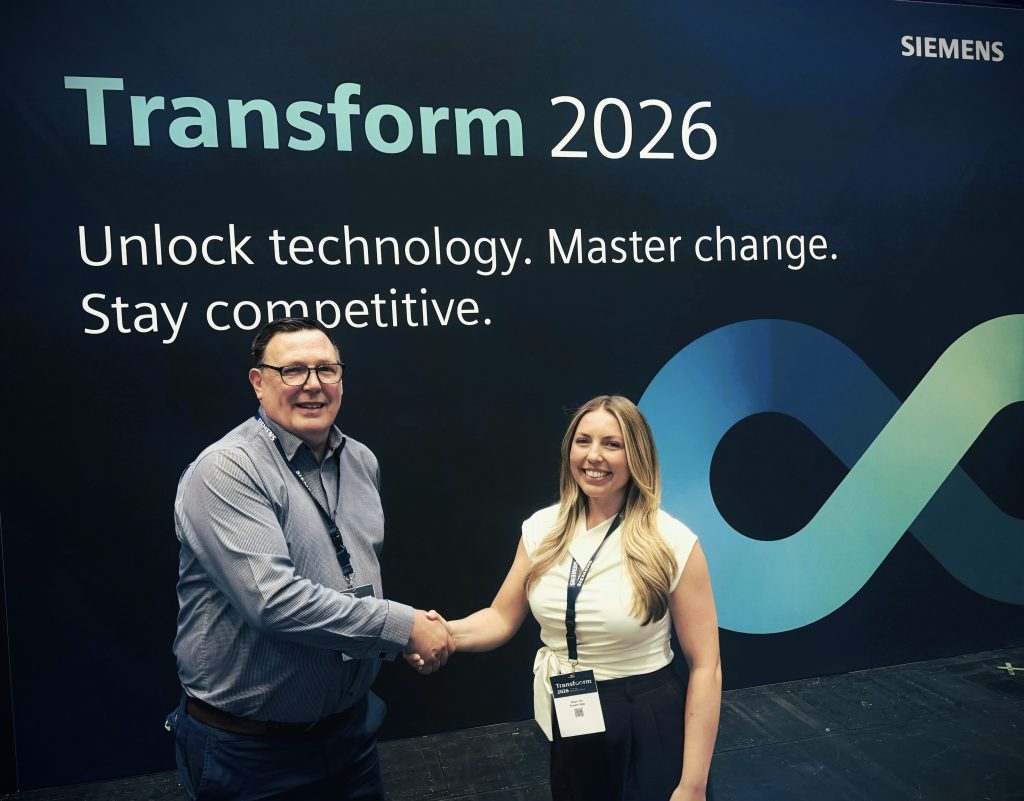
DTG, the life sciences digital transformation specialist, has taken its partnership agreement with Siemens to active deployment across pharmaceutical and a broad range of manufacturing sectors in the UK and internationally. The platform, developed by DTG in partnership with Siemens Cyber Security, and delivered under the Siemens brand as SieCAST, gives senior leaders visibility of their operational technology (OT) cyber security risk, gap and remedial actions across every site in their network.
OT refers to the software and systems that control physical manufacturing processes on the factory floor, such as automated production equipment, process control systems and cyber-physical technologies. Like a data breach, a cyber-attack on OT systems can disrupt production – but in more immediate and direct ways that can have significant safety, environmental and or quality impact. SieCAST is now live and in active use with a variety of Siemens’ clients globally.
The partnership reflects complementary expertise: DTG brings pharmaceutical manufacturing leadership experience with a deep contextual understanding of the accountability that Pharma manufacturing demands while Siemens brings deep OT cyber security knowledge and the technical authority to execute assessments and advise client on corrective actions to reduce business risk. DTG has built and will maintain the software that enables timely decisions by leadership teams – an increasingly important aspect of Manufacturing leadership as OT Cyber Security moves from best practice to a legislative requirement. To scale delivery, Siemens provides a network of trained cyber partners who conduct SieCAST assessments on its behalf, supporting manufacturers across multiple sectors and geographies.
SieCAST is built around IEC 62443, the internationally recognised standard for OT cyber security, and includes mapping to local regulatory frameworks and best practices such as the EU’s NIS2 Directive, the NIST Cybersecurity Framework, and the UK Cyber Assessment Framework. Organisations can demonstrate compliance across multiple jurisdictions from a single assessment programme, rather than running separate processes for each regulatory environment. This is of particular value to global manufacturers with diverse site networks operating under different national requirements.
The deployment reflects growing regulatory pressure on manufacturers. The EU’s NIS2 Directive has introduced fines of up to 2% of global annual revenue for non-compliance with cyber security requirements, and the UK is moving in the same direction. The Health and Safety Executive is understood to be exploring the inclusion of OT cyber security within health and safety legislation, a development that would extend legal accountability into an area that many organisations have treated primarily as an IT governance matter. Insurance underwriters are also demanding more than a completed assessment including evidence that organisations are actively managing their cyber security over time.
For pharmaceutical manufacturers, where cyber incidents can halt production of critical medicines and disrupt global supply chains, these regulatory and commercial pressures are translating into board‑level scrutiny of OT cyber readiness.
Steven Kenny, Managing Director DTG said:
“As former Manufacturing and Supply Chain leaders in the Pharmaceutical Industry, we understand what happens, operationally, after an OT cyber assessment. How the people who are accountable for security across a manufacturing network actually need to receive and act on that information. This partnership works because together, we give manufacturers the assessment rigour of Siemens and the management visibility that turns that assessment into a continuous programme of improvement.”
SieCAST has been piloted with Pharmaceutical manufacturers in the UK, Europe and, imminently, the US, with further deployments in in defence, aggregates, food manufacturing, spirits production, and life sciences. The platform’s underlying technology has already been deployed in multiple manufacturing sites globally, demonstrating its ability to operate at scale across large, geographically distributed site networks. In one early deployment with a global pharmaceutical manufacturer, the underlying SieCAST technology is supporting OT cyber lifecycle management across several dozen sites, consolidating previously fragmented assessments into a single view for network‑level decision‑making.
While SieCAST enables technical teams, it also operates above the technical layer, giving site directors, VP-level security leads, and board members a true comparative picture of an organisation’s cyber security across every site, with consistent scores, action tracking, and progress reporting over time. A site director asked by their board whether the organisation is in control of its cyber risk, or by an insurer whether it can demonstrate compliance, now has a defensible, actively managed answer.
The platform’s lifecycle management approach means organisations do not simply score once and move on. SieCAST structures findings into assigned actions, tracks improvement against each gap, and updates scores in progressively as work is completed. For global manufacturers managing networks of sites across different regulatory environments, it provides a consistent benchmark that allows targeted investment for highest priority sites.